







Vietnam e-visa 2026: a step-by-step application guide
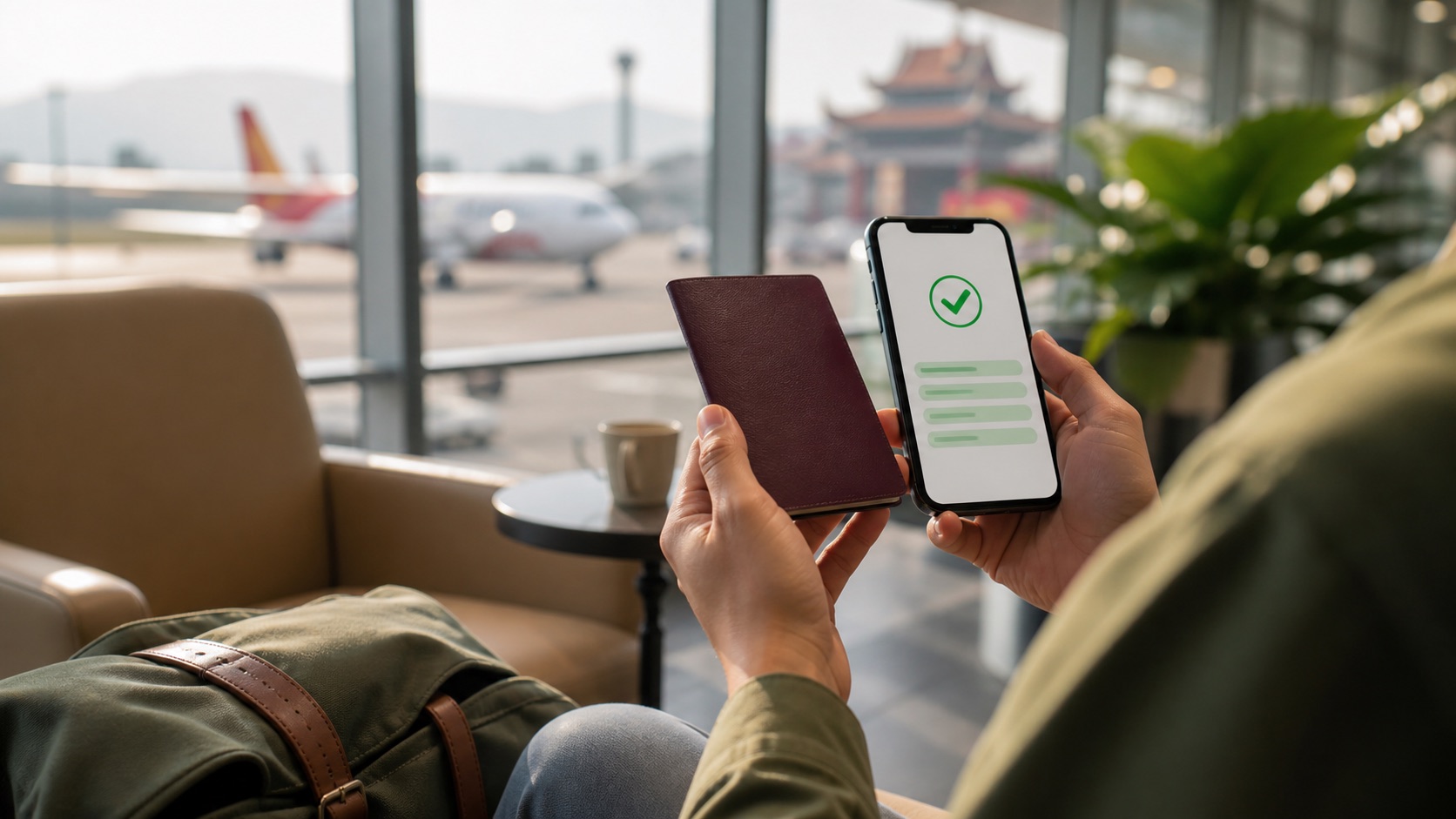
The Vietnam e-visa is an electronic entry document issued online by the Vietnam Immigration Department. You complete the application, pay through the national portal, retrieve the result online and present the approved visa with the same passport when you travel.
EasyVisa prepared this independent guide from current official sources. It covers the application from start to finish: what to prepare, the difference between single and multiple entry, how to avoid lookalike websites, and what to check before a flight or land-border crossing.
Vietnam e-visa key facts
“Up to 90 days” is a ceiling, not an automatic 90 days from arrival. Your permitted period is the start-to-end date range printed on the issued visa. Check those dates before you book travel.
The portal states a three-working-day processing time. Treat it as the published processing period rather than a delivery guarantee: a correction request, public holiday, payment issue or unusually high volume can add time.
| Item | Current rule |
|---|---|
| Validity | Up to 90 days, within the dates printed on the visa |
| Entries | Single or multiple |
| Government fee | about VND 650,000 (USD 25) single entry; about VND 1.31M (USD 50) multiple entry |
| Published processing time | 3 working days for a valid application |
| Result | Retrieved and downloaded online |
| Entry and exit | Through government-designated international checkpoints |
Who can apply for a Vietnam e-visa?
The national portal lists three core conditions: the applicant is a foreigner outside Vietnam, holds a valid passport or international travel document, and is not subject to an entry suspension under Vietnamese law.
The system accepts eligible passports from countries and territories shown in its application flow. An approved e-visa still does not guarantee admission; immigration officers make the final entry decision at the checkpoint.
EasyVisa is a private support service, not a government authority, and cannot guarantee visa approval or admission.
What to prepare before opening the form
- The passport you will use to enter Vietnam; check its expiry date and physical condition.
- A recent, front-facing portrait without glasses, with even light and a clearly visible face.
- A straight, glare-free image of the complete passport data page, including all four corners and both MRZ lines.
- An active email address, telephone number, home address and the personal details requested by the form.
- Your intended arrival date, length of stay, Vietnam accommodation address and purpose of travel.
- Your intended entry and exit checkpoints, matched to the journey you actually plan to take.
- A payment method accepted by the portal.
Do not beautify the portrait, photograph the passport from another screen, or crop away any corner or machine-readable line.
How to apply on the official portal
Type evisa.gov.vn into the address bar yourself and confirm the domain before entering passport data. Search results contain intermediary sites whose pages resemble an official service but add their own charges.
- Step 1 — complete the form: copy personal data from the passport and upload the portrait and data-page images.
- Step 2 — save the registration code: screenshot or record it immediately; you need it to retrieve the application.
- Step 3 — proofread: compare every character in the name, passport number, dates, nationality and checkpoint with the originals.
- Step 4 — pay: the portal charges the fee in USD by card — USD 25 (about VND 650,000) for single entry or USD 50 (about VND 1.31M) for multiple entry.
- Step 5 — track the result: use the registration code, email and date of birth, and respond if the system requests an update.
- Step 6 — download and print: once approved, download the official e-visa file and carry a paper copy with the passport.
The government fee is non-refundable if a visa is not granted. Do the final character-by-character check before payment.
Single entry or multiple entry?
A single-entry visa is spent once you enter Vietnam with it, even if its end date is weeks away. A multiple-entry visa lets you leave and return within the printed validity period, subject to the permitted checkpoints and entry conditions each time.
- Choose single entry for one uninterrupted Vietnam trip.
- Choose multiple entry if you will visit Thailand, Laos, Cambodia or home and then return to Vietnam.
- Multiple entry does not extend the end date; it only changes how many entries the visa can support.
Choose a checkpoint from the current official list
E-visas can only be used through international checkpoints designated by the Vietnamese Government. The list has expanded over time, so an older article naming 42 checkpoints is no longer a reliable application checklist. Use the current options on evisa.gov.vn on the day you file.
Match the checkpoint to the real itinerary. Tan Son Nhat airport and the Moc Bai land border are different places; Da Nang airport and Lao Bao are different places too. If the route is undecided, settle it before submitting.
For a land-border trip, check the neighbouring country’s visa rules separately. A Vietnam e-visa does not serve as a Lao or Cambodian visa.
Ten mistakes that cause delays or a new application
- Using a lookalike intermediary site and mistaking its service charge for the government fee.
- Typing names from memory rather than copying the passport exactly.
- Entering one wrong letter or digit in the passport number.
- Mixing up the issue date, expiry date or date of birth.
- Uploading a dark, cropped or glasses-on portrait.
- Uploading a passport page with glare, missing corners or unreadable MRZ lines.
- Buying single entry when the itinerary requires a return to Vietnam.
- Selecting a checkpoint that does not match the booking.
- Losing the registration code or access to the application email.
- Booking too close to travel because three working days was treated as a guarantee.
What to check after approval
Never edit an issued PDF yourself. An altered file is not a corrected visa. If important data is wrong, use the official support route and be prepared to submit a new application when required.
- Match the name, date of birth, sex, nationality and passport number.
- Read the valid-from and valid-until dates; do not rely on the phrase “90 days”.
- Confirm single or multiple entry matches what you requested and paid for.
- Check the intended entry checkpoint against the transport booking.
- Print a paper copy and keep backup PDFs in your phone and email.
- Complete any pre-arrival declaration the official portal recommends at the time of travel.
If you are already in Vietnam and planning a visa run
The official portal describes direct e-visa applicants as foreigners outside Vietnam. If you are currently in Vietnam and hope to return on a new e-visa after exiting, verify the application timing, your own circumstances and the planned checkpoint before paying for transport.
Do not leave with only a payment receipt or a pending status. Travel only when you have an appropriate return basis, the documents have been checked and the neighbouring country’s requirements are understood.
How to spot a risky website or promise
- A domain resembling evisa.gov.vn but with extra words, hyphens or a different suffix.
- A page calling itself “government visa” without separating the government fee of about VND 650,000 / 1.31M (USD 25/50) from its service charge.
- A guarantee of approval or admission; no private business controls either decision.
- Payment to an individual with no written quote or terms.
- A request to hold the original passport for a process completed online.
Frequently asked questions
What is the official website for a Vietnam e-visa?
The national e-visa portal currently uses evisa.gov.vn. Check the exact domain before uploading passport information or making a payment.
How long is a Vietnam e-visa valid?
Up to 90 days, for single or multiple entry. Your actual permission is the date range printed on the visa, not automatically 90 days from arrival.
How much does a Vietnam e-visa cost?
The official portal lists a fee of about VND 650,000 (USD 25) for single entry and about VND 1.31M (USD 50) for multiple entry. The fee is not refunded if the visa is not granted.
How long does a Vietnam e-visa take?
The official published processing time is three working days for a valid file. Apply earlier because holidays, corrections and payment issues can add time.
Do I need to print the Vietnam e-visa?
Yes. Download the approved file and carry a paper copy with the passport used in the application; keep a digital backup as well.
Can an issued e-visa be edited?
Do not alter the PDF. If key data is wrong, ask through the official channel; many material errors require a new application and fee.
Does an e-visa guarantee entry to Vietnam?
No. It permits travel to a checkpoint to request entry. Immigration officers retain the final decision.